
CRM Consulting
Technology
CRM

Marketing runs campaigns in one system. Sales works deals in another. Both teams believe they are looking at the same customer, and neither one is. That gap is where pipeline goes missing, attribution arguments start, and budget decisions get made on incomplete evidence.
It shows up in the data. Salesforce's State of Sales report, based on 4,050 sales professionals across 22 countries, found the average seller spends just 40% of their time actually selling, and 51% of sales leaders already using AI say disconnected systems are slowing those initiatives. On the marketing side, Salesforce's State of Marketing report of 4,450 marketing decision makers found only 56% have complete access to sales data. A majority of marketers are optimizing campaigns without seeing what closed.
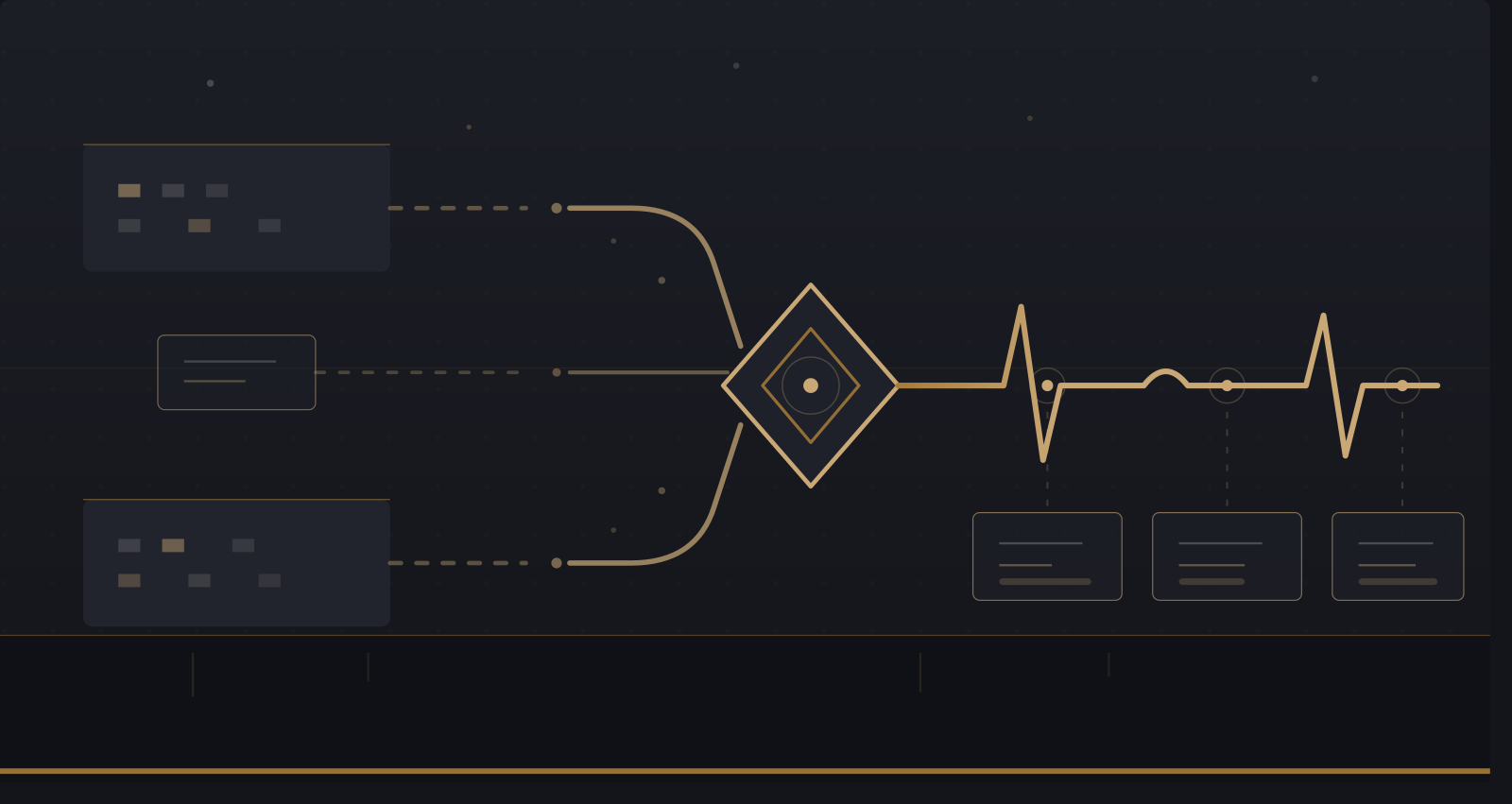
CRM integration services address this directly. Not by adding another tool, but by connecting the ones you already run so that marketing, sales, and lead management operate on one shared record. This guide covers what that work involves, how to scope it, and how to tell whether it worked.
CRM integration services connect your CRM to the other systems that hold customer data: marketing automation, event and lead capture tools, ERP, support platforms, and in healthcare and life sciences, clinical and claims systems.
The work has three parts. Architecture: deciding which system is the source of truth for each object and field. Data engineering: mapping fields, resolving duplicates, and building the sync. Process: defining the lifecycle stages, ownership rules, and reporting the connected data now makes possible.
Most teams underestimate the third part. A connector that moves records between HubSpot and Salesforce is straightforward to install. The consulting work is deciding what a Marketing Qualified Lead means, who owns a contact after it converts, and which system wins when both have a different phone number. We covered the failure modes in detail in Why Healthcare CRM Integration Fails in 2026.
Misalignment is rarely about goodwill. It is usually one of four structural causes:
HubSpot's survey data reflects the cost: asked what misalignment damages most, 39% of marketers named lost revenue. On what blocks alignment, 32% named a lack of communication and 29% named different tools and misaligned goals.
Bi-directional sync means a change in either system propagates to the other. A rep updates a title in Salesforce and marketing's segmentation reflects it; marketing records an email engagement in HubSpot and the rep sees it on the timeline before the next call.
Getting there requires decisions most teams skip:
Gartner has put the cost of poor data quality at a minimum of $12.9 million a year per organization, based on 2020 research. Integration without data governance does not reduce that number. It distributes the bad data faster.
The integration is where a lead definition stops being a slide and becomes a rule. A working lead management model needs:
That last point matters more than it looks. Without a structured rejection reason, marketing has no feedback loop and will keep sourcing leads sales does not want.
Closed-loop attribution means campaign data travels with the record from first touch through to closed-won, so you can answer which campaigns produce revenue rather than which produce form fills.
This is what Allucent was after. The global drug development solutions provider ran HubSpot for marketing and Salesforce for sales, but data did not move cleanly between them, so they could not track leads through the funnel or measure campaign effectiveness. A six-month bi-directional integration plus custom HubSpot dashboards gave them visibility from campaign to closed deal.
Automation earns its place where a rule is unambiguous and the volume is real. Good candidates:
GammaTile, an FDA-cleared surgically targeted radiation therapy for operable brain tumors, is a clear example of the last one. Manual event lead processing was creating format inconsistency, duplicates, and attribution gaps. An automated iCapture to HubSpot to Salesforce flow with bi-directional syncing removed the manual uploads entirely.
Where automation does not belong: judgment calls. Do not automate disqualification, or a stage change a rep should own, or around a broken process. You will only run it faster.
A realistic sequence:
If you are evaluating outside help for this, the criteria are covered in How to Choose CRM Consulting Services in 2026.
Three constraints change the design:
Connecticut Children's is an example of that third constraint. Unifying sales and marketing across Salesforce NPSP and Marketing Cloud, alongside their existing platforms, contributed to 50% additional fundraising over a one-year project.
Measure the mechanics, not just the revenue:
Pick baselines before the project starts. Retroactive baselines are always flattering.
Marketing and sales alignment is an outcome of shared data, not shared meetings. CRM integration services deliver that shared data by connecting marketing automation and sales CRM through governed, bi-directional synchronization, with field mapping, deduplication rules, lead definitions, and the attribution model decided before anything is switched on.
The order matters. Clean the data, agree on the definitions, then build the connection. Teams that reverse it end up with the same disagreements, arriving faster.
Moblize.it has 18+ years in CRM consulting, with the deepest experience in healthcare and life sciences, across 40+ HubSpot and 30+ Salesforce implementations. To scope your integration honestly, get in touch for a 30-minute assessment.
What is the difference between CRM integration and CRM implementation?
Implementation is standing up the CRM itself: objects, fields, workflows, and users. Integration connects that CRM to other systems so data moves between them. Most organizations need implementation once and integration continuously as the stack changes.
How long does a HubSpot to Salesforce integration take?
It depends on data condition and the number of decisions outstanding, not on connector complexity. A clean pair of instances with agreed definitions integrates quickly. Duplicate-heavy databases with no shared lead model take considerably longer, because the real work is cleanup and alignment rather than configuration.
Do we need to clean our data before integrating?
Yes. Syncing a database with duplicates and inconsistent fields propagates those problems into a second system and makes them harder to unwind. Deduplication and normalization belong before go-live.
Can marketing and sales share one system instead of integrating two?
Sometimes, and it is worth evaluating. But consolidation has its own costs: retraining, migration risk, and loss of function that one team depends on. Integration is usually the lower-risk path when both platforms are entrenched and both teams are productive in them.
What is the first thing to fix if sales and marketing disagree about lead quality?
The lead definition, enforced in the system with a structured rejection reason. Until sales can reject a lead with a recorded reason that marketing can report on, the disagreement has no data to resolve it.